In short
A pack-out is when a restoration company documents, boxes, and removes your belongings so they can be cleaned and stored while your home is repaired. Before anything leaves, photograph every room, set aside what you need day to day and what can't be replaced, and ask for a written inventory with box numbers. When your things come back, check them against that list before you sign off.
Watching strangers box up your home is hard, even when they're there to help. It can also be confusing. Where are your things going? How will you know what came back? This guide explains what usually happens and how to keep track of everything without adding to your stress.
Where are you in the process?
Key numbers
What is a pack-out?
A pack-out is the removal of your belongings, often called "contents," so they can be cleaned and stored safely while your home is repaired.
Contents are the things you'd take with you if you moved: furniture, clothing, dishes, electronics, books, and decorations. After a fire, many of these items can be saved, but cleaning them inside a damaged house is hard, and leaving them there during repairs can cause more damage. That's why restoration companies often move them to a facility built for cleaning and storage.
Even items that weren't damaged may be packed out so they don't get dirty or broken while crews work.
How a pack-out works, step by step
Most pack-outs follow the same path: document, pack, move, clean, store, and return.
- Step 1Documentation
The crew takes photos and video of each room with your belongings still in place.
- Step 2Packing
Items are wrapped and boxed. Each box should get a description of what's inside and a number that matches the inventory.
- Step 3Moving
Boxes and furniture go to the company's cleaning and storage facility.
- Step 4Sorting and cleaning
Items are sorted into what can be cleaned, what needs special restoration, and what can't be saved. Cleaning methods depend on the material and the type of soot.
- Step 5Storage
Cleaned items are stored until your home is ready.
- Step 6Pack-back
Your belongings are brought back, unpacked, and checked against the inventory.
Items the company decides can't be saved should be documented so you and your insurer can review them before anything is thrown away. Ask the company how they handle this.
Before the truck arrives: what to do
Photograph everything, set aside what you can't live without, and agree on how you'll track every box.
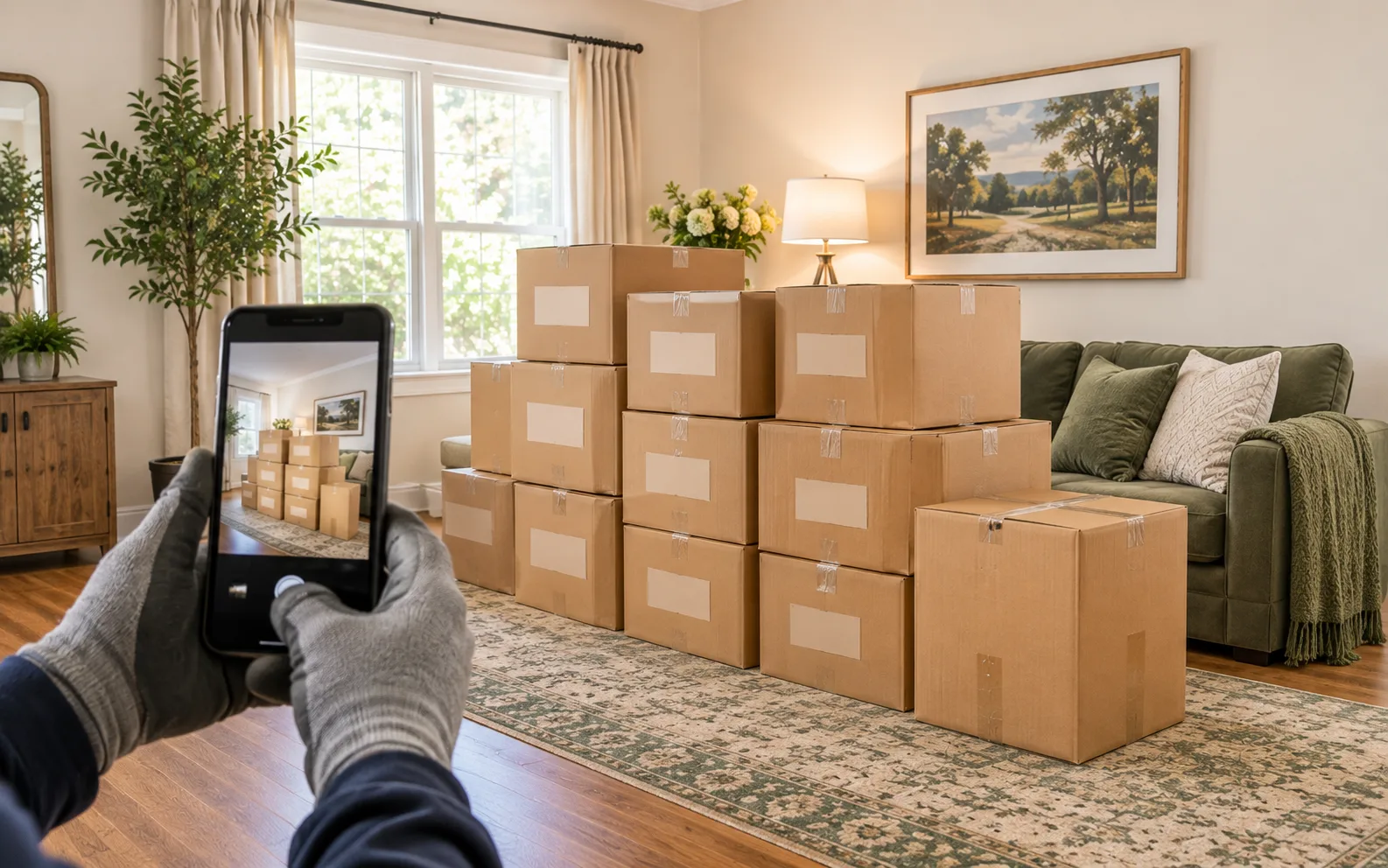
- Walk through every room with your phone. Take video and photos of each room, then open closets, drawers, and cabinets and photograph what's inside. Do this even if the crew is documenting too. That way you have a record that doesn't depend on anyone else.
- Keep what you'll need. Set aside medications, chargers, work laptops, school supplies, important papers, and a few days of clothing.
- Keep what can't be replaced. Photos, heirlooms, jewelry, and keepsakes are often safer with you or with family than in a storage facility.
- Ask how the inventory works. Find out whether you'll get a printed or digital list with box numbers, photos, and room labels, and when you'll get it.
- Ask where your things are going. Get the facility's address and the name of the person who will answer your questions.
- Read the work authorization before you sign. Make sure it lists what's being packed, where it's going, and how each part is billed. Keep a copy.
- Don't plug in or turn on electronics that were exposed to heat, smoke, or water. Restoration pros recommend having them checked first.
Printable: pack-out day checklist
- [ ] Video and photos of every room, closet, and drawer
- [ ] Medications, chargers, and essentials set aside
- [ ] Irreplaceable items (photos, heirlooms, documents) kept with you
- [ ] Facility address and contact name written down
- [ ] Agreed date for getting the inventory
- [ ] Copy of the signed work authorization in hand
Clean in place or pack out?
Lightly affected items in rooms that won't be torn up can sometimes be cleaned where they are. Items in rooms that need heavy repairs usually have to be packed out.
| Clean in place | Pack out | |
|---|---|---|
| Works best for | Light smoke on hard items, rooms that won't be torn up | Heavy smoke or soot, rooms that need demolition or major repairs |
| Where cleaning happens | In your home | At the company's facility |
| Tracking | Easier, because items stay put | Depends on a good inventory and box numbers |
| Watch out for | Items getting dirty again during repairs | Delays, and items that are hard to find or slow to come back |
If a company recommends a full pack-out of rooms that saw little smoke, it's fair to ask why.
How companies charge for contents work
Contents work is often billed in separate parts, including packing, cleaning, storage, and pack-back. Ask for each to be shown as its own line.
Restoration companies commonly bill contents cleaning in one of three ways: by the hour, by the box, or by the item, sometimes with specialty pieces priced separately. Storage is often billed by the month, so the length of your repairs affects the total.
| Part of the job | What to ask |
|---|---|
| Packing and moving | How many crew members and hours, or how many boxes? |
| Cleaning | Hourly, per box, or per item? Which items get specialty cleaning? |
| Storage | What's the monthly rate, and is the facility climate-controlled? |
| Pack-back | Does it include unpacking and putting things back where they were? |
| Items that can't be saved | How will they be documented, and who decides? |
Contents work can add up quickly, so before anything starts, ask your insurer what your policy covers for cleaning, storage, and replacement.
Building your inventory
Go room by room, list each item with a rough age and value, and attach photos and receipts where you can. Keep a copy somewhere other than your house.
Most insurance companies will want a list of damaged or lost items. The Texas Department of Insurance (TDI) suggests listing furniture, clothing, appliances, silverware, glassware, and other belongings.
A few things make it easier:
- Start with your photos. The pictures you took before the pack-out are your best memory aid. Your phone's photo library, social media posts, and online order history can fill in more.
- Go one room at a time. Follow the same path you'd walk through the house, and don't forget closets, the garage, and the attic.
- Don't wait for perfect details. Brand, model, age, and rough value help, but a short description and a photo are better than nothing.
- Ask family and friends. They often remember things you'll forget, especially gifts.
- Use a free tool if it helps. TDI points homeowners to the free NAIC Home Inventory app, and many insurance companies offer their own.
- Keep a copy away from home. Store it in cloud storage, email it to yourself, or give a copy to a family member.
- Check the company's inventory when it arrives. Compare it with your own photos within a few days, and tell the company right away about anything that's missing or described wrong.
Printable home inventory form
Use one page per room, and print as many pages as you need. Match each item to the box number on the restoration company's inventory.
Room: ____________________
| Item (brand or model) | Age and cost (about) | Damage: none, smoke, water, burned | Box no. / Back? |
|---|---|---|---|
| ☐ | |||
| ☐ | |||
| ☐ | |||
| ☐ | |||
| ☐ | |||
| ☐ | |||
| ☐ | |||
| ☐ |
What families wish they'd known
Pack-outs can take longer than you expect, and items can be hard to track once they leave the house.
One family who wrote about their recovery said they were told their belongings would come back about 12 weeks after the fire. Ask for a realistic timeline up front, and check in regularly.
Without box numbers that match a written list, finding a single item or showing that something is missing can be hard.
Clothing, fabrics, and soft furniture can take more than one cleaning, and some may still smell of smoke. See why your house still smells like smoke after a fire.
Turning on a device that was exposed to heat, soot, or water can damage it, so have it checked first.
Mistakes to avoid
Most problems are easier to avoid if you keep your own records and read before you sign.
Avoid these mistakes
- Relying only on the company's photos. Take your own, before anything is moved.
- Letting irreplaceable items go into storage. Keep heirlooms, photos, and key documents with you when you can.
- Signing a work authorization you haven't read. Make sure you understand what's included and how it's billed.
- Signing off on the pack-back too fast. Unpack, check the boxes against the inventory, and note anything missing or damaged before you sign.
- Throwing out damaged items yourself. Keep them, or photograph and list them, until you've checked with your insurer.
Frequently asked questions
Can I keep some of my things instead of having them packed out?
Usually, yes. Tell the crew before they start which items you want to keep with you, especially medications, important papers, and irreplaceable items. Anything that was exposed to heavy smoke may still need cleaning first.
How long will my belongings be in storage?
Often until the repairs are done, which can be weeks or months. Ask the company for an estimated timeline and a contact you can call for updates.
Can I get something out of storage before the pack-back?
Many companies can bring you specific items if you ask. Ask whether there's a charge. A good inventory with box numbers makes that much easier.
What if something is missing or damaged when my belongings come back?
Check every box against the inventory before you sign off. Write down what's missing or damaged, take photos, and tell the restoration company in writing right away. Let your insurer know as well. For general questions about how homeowners insurance works in Texas, you can call the Texas Department of Insurance Consumer Help Line at (800) 252-3439.
Who pays for the pack-out?
It depends on your policy. Most homeowners policies include coverage for personal property, but what's included for cleaning, storage, and replacement varies. Ask your insurer before work starts.
Your next step
- If smoke odor is the problem, read why your house still smells like smoke after a fire.
- If you're still choosing a company, see questions to ask before you hire anyone.
- If the fire was very recent, start with what to do after a house fire in Dallas.
Where to go next
Sources
- Texas Department of Insurance, "A Home Inventory: Why You Need It and How to Do It"
- Texas Department of Insurance, "How to Make a Home Inventory for Insurance"
- Minnesota Department of Commerce, "Home Inventory" (citing the NAIC survey)
- San Mateo County Department of Emergency Management, "Personal Property"
- R&R Magazine, "Ask Annissa: By the Hour or Box? What's the Best Way to Bill Contents Cleaning?"
- Rainbow Restoration, "Cleaning and Storing Contents: How We Handle Your Belongings"
- PuroClean, "What To Do With Your Belongings After Fire or Flood Damage"
- The Organic Prepper, a family's account of recovering after a house fire
- Texas Department of Insurance, insurance help and complaints